Mini excavator uses are common on residential construction sites, landscaping projects, and utility installations. Compared with a full-size excavator, they have a more compact body, which makes them well suited to working in tight spaces or areas surrounded by buildings and other obstacles.
That said, a mini excavator isn’t the best answer for every project. What it can actually do depends on the machine’s size, dig depth, working conditions, and the attachments it’s running. Knowing what it’s good at — and where it’s limited — helps contractors and equipment buyers make better decisions.
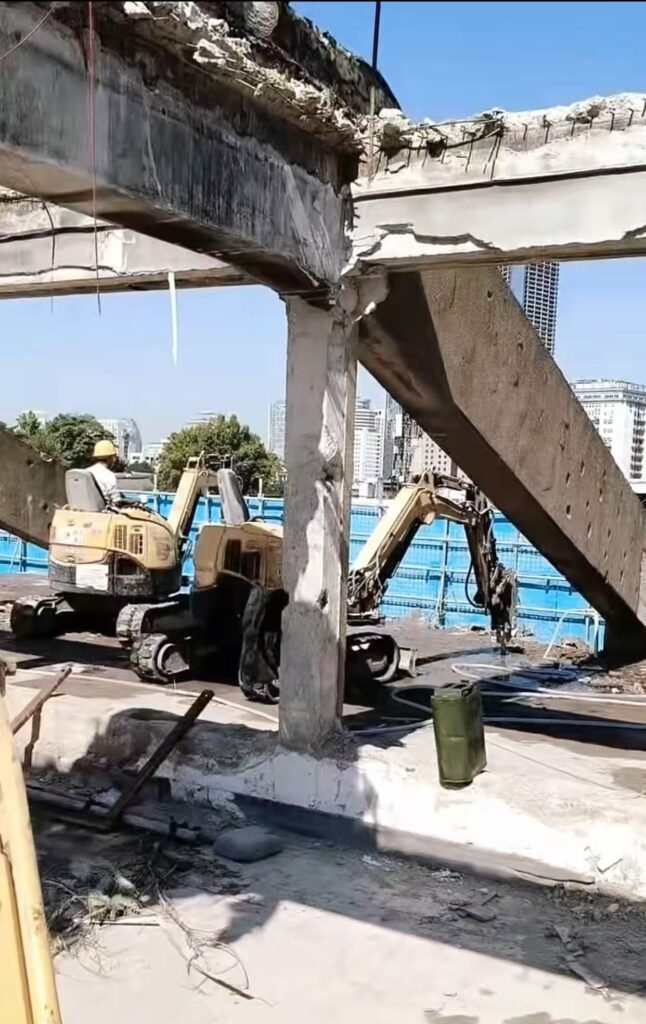
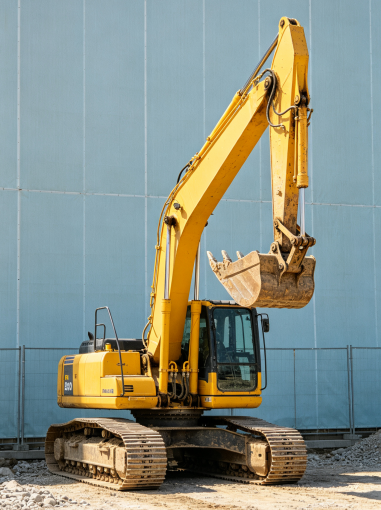
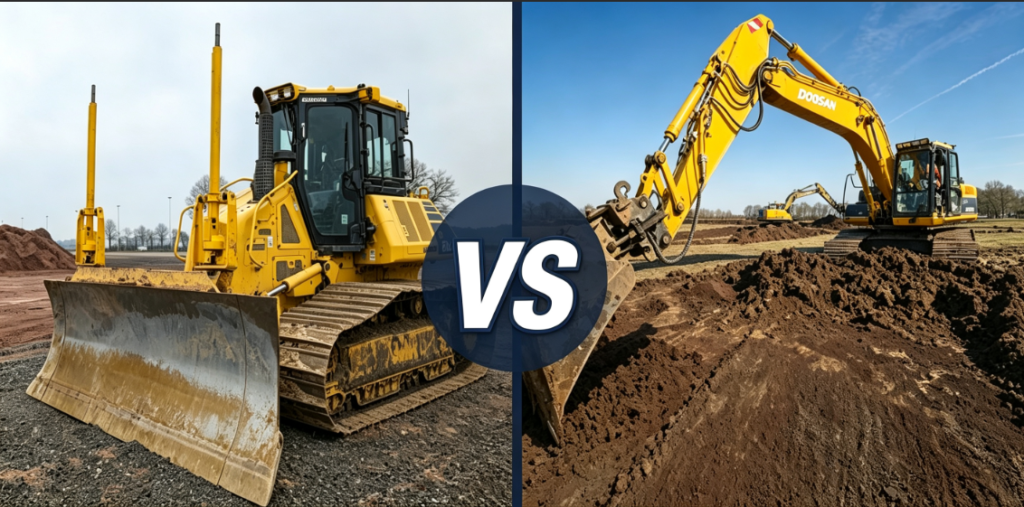
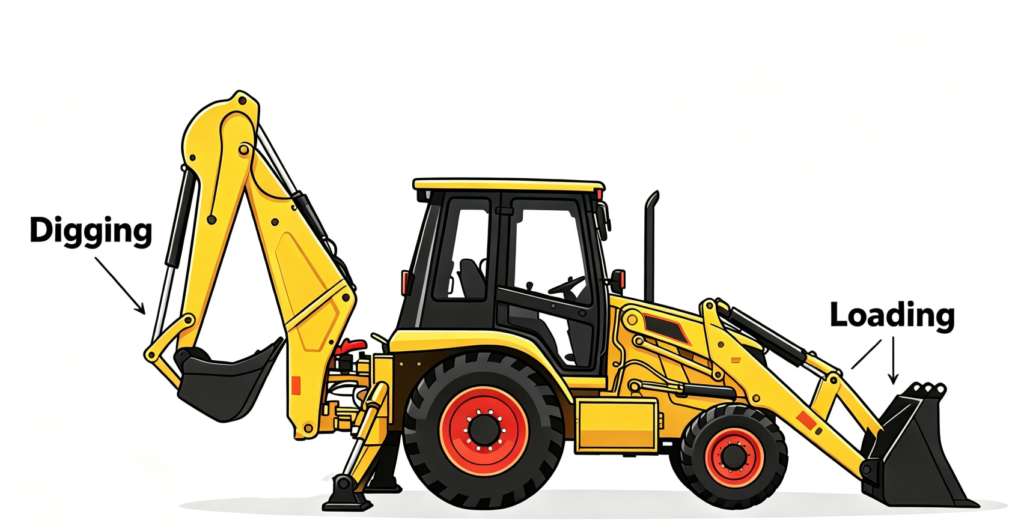
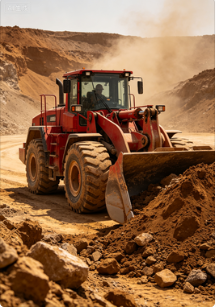
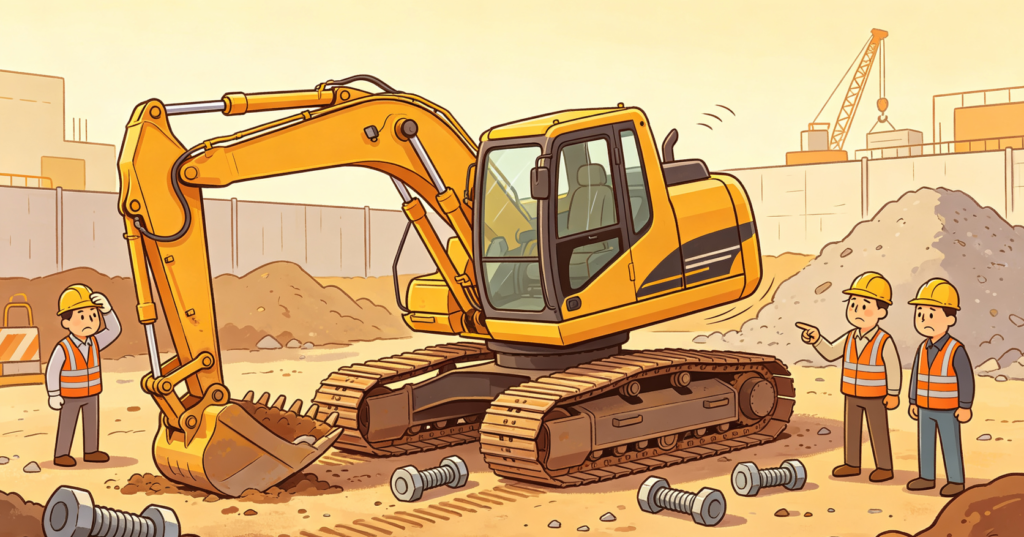
Real photos of mini excavator at the construction site
What Is a Mini Excavator?
A mini excavator is a compact piece of construction machinery, usually made up of an undercarriage, an upper structure that swings, a boom, an arm, and a bucket. SANY, a well-known manufacturer, lists the operating weight of its mini excavators at roughly 1.95 to 5.3 tonnes .
Models vary in operating weight, dig depth, working radius, and engine performance.
What sets it apart isn’t simply the smaller size — it’s the ability to dig, trench, clean up, and grade within a fairly confined space. With the right attachment, the same machine can also take on drilling, breaking, or grabbing material.
When you’re buying one, don’t go by the machine’s looks or its advertised tonnage alone. You also need to confirm the actual working space, dig depth, ground conditions, and transport requirements.
What Are the Most Common Mini Excavator Uses?
1. Landscaping and Site Preparation
Landscaping work often has to happen around houses, fences, lawns, and existing planting. A mini excavator can dig tree pits, remove stumps, reshape terrain, and prepare the ground for a garden makeover or landscape build.
Compared with manual labor, it can deliver a 40–60% boost in productivity in grading, digging, and material movement — especially valuable for small landscaping crews that need to take on more projects without adding headcount.
For surface stripping and fine grading, a toothless grading bucket is a good match. It removes the top layer of soil and leaves a clean finish without tooth marks.
For stump removal, a mini excavator can clear a stump in roughly 5–30 minutes once the operator has the technique down — and unlike stump grinding, it pulls out the entire root ball, leaving a hole ready for replanting.
If you need to grip and place materials, a hydraulic thumb is worth adding. It lets you pick up and position landscape rocks, logs, and similar material with far less manual labour.
A real-world example: a UK landscaping contractor used a 2.6-tonne mini excavator with a thumb grab to handle trunk removal, root clearing, and ground prep for a playground and outdoor gym area. They finished the whole area in about a day and a half.
As the operator put it, “What would’ve needed a small crew before is now a one-man job — with time to spare.”
Naturally, different landscaping tasks call for different attachments. Depending on your situation, you can rent or buy.
2. Trenching and Utility Work
Laying drainage pipe, irrigation lines, and underground utilities usually means digging a trench to spec. A mini excavator with the right bucket handles this well.
Trench width, depth, and precision matter. Before digging, confirm existing utilities and choose the right machine and attachment.
For efficiency: a trench over 50 ft, or deeper than 24 in in average soil, is faster with a mini excavator. Hand digging that takes all day can be done in under an hour with a 1- to 2-tonne machine.
Common trench sizes:
| Trench size | Applications | Notes |
|---|---|---|
| Ultra-narrow (6–10 in) | Fibre optic, irrigation, fence posts | Buckets 30–40 lb, for mini excavators under 2 t |
| Standard narrow (12–18 in) | Water lines, sewer branches, footings | 18-in bucket cuts 22–24 in wide in most soils |
| Wider narrow (20–24 in) | Larger pipe (10–12 in+) or multiple lines | Needs 4–6 t excavator |
Bucket width matters. An 8-in trenching bucket weighs 37.3 lb, a 12-in weighs 44.3 lb — lighter buckets balance better on compact machines. Dedicated trenching buckets come in 12–36 in widths.
A UK contractor using a 2.6-tonne mini excavator around live utilities cites precision and balance as key near cables.
Safety: OSHA requires protective systems for trenches 5 ft or deeper (unless solid rock). Trenches 4 ft or deeper need an exit within 25 ft. Call 811 and allow at least two full working days for utility marking.
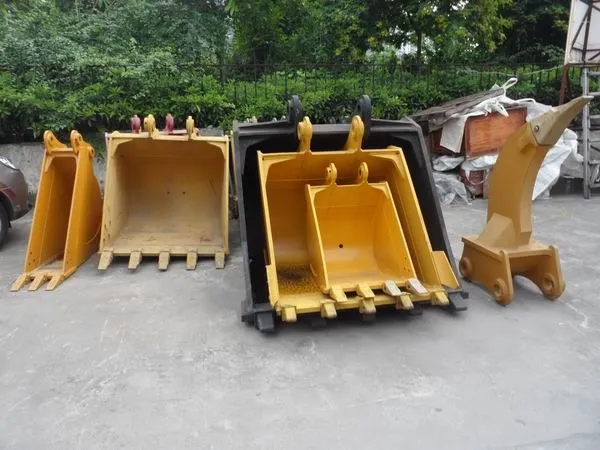
You can also customize bucket size based on your mini excavator uses.
3. Residential Construction and Renovation
During residential construction, a mini excavator can handle localised footing excavation, site preparation, grading, and some extension and renovation work.
A real-world example: a Spanish residential developer in Alicante used a 1.7-tonne Bobcat E17z for excavation, levelling, and earthmoving on a housing project. The machine’s zero tail swing design allowed safe work in confined spaces without the risk of collision with nearby obstacles.
Compared with larger equipment, it may be easier to reposition on a confined site, with less impact on the surrounding area. But if the job involves deeper footings, a large volume of earthmoving, or tricky ground conditions, you’ll need to look more closely at its digging capability and productivity — site size alone shouldn’t decide the machine.
These are typical mini excavator uses on smaller building sites.
4. Light Demolition and Cleanup
Fitted with the right attachment — a breaker, for example — a mini excavator can take on a certain amount of light demolition, such as breaking up localised concrete, removing small hard obstructions, and clearing construction waste.
In practice, you have to confirm that the machine’s hydraulic system is compatible with the attachment, and assess the structure, materials, and safety risks of whatever you’re breaking up. Large structural demolition, or any job with a risk of collapse, calls for equipment and a construction method that meet the engineering requirements.
This is a video filmed by a friend of mine who works at a construction site—they are using a hydraulic breaker to demolish the beams of an old building.
5. Agriculture and Land Maintenance
On farms and agricultural land, a mini excavator can help dig drainage ditches, dig tree pits, level ground, and handle some fencing work and site clearing.
The exact tasks it suits depend on ground conditions and how the machine is set up. Soft or wet ground, for instance, affects stability and mobility. So before you start, judge the actual site conditions rather than assuming a mini excavator can get onto every plot.
If the workload is large, you need to size up. Trying to make a mini excavator do a big machine’s job rarely pays off.
6. Drainage and General Earthmoving
Mini excavators are efficient for stormwater drainage trenches, localised grading, backfilling, and small-scale earthmoving.
But earthwork and drainage are also where the consequences of getting it wrong are most severe. Cave-ins and trench collapses cause dozens of fatalities and hundreds of injuries each year. Excavation workers are more than twice as likely to be killed as workers in any other type of construction work.
The first rule: never enter an unprotected trench.
OSHA requires a protective system — sloping, benching, shoring, or a trench box — for any trench 5 ft (1.5 m) or deeper, unless the excavation is made entirely in stable rock.
Trenches 20 ft or deeper require a protective system designed by a registered professional engineer. Even below 5 ft, a competent person must inspect the trench daily and after every rainstorm before anyone enters.
Spoil piles and equipment placement matter just as much.
Soil piled too close to the trench edge adds surcharge load to an already unsupported wall. Heavy equipment vibrating near the edge can also trigger a collapse.
Therefore, OSHA requires:
- Spoil piles and heavy equipment to be kept at least 2 ft (0.6 m) from the trench edge.
- Never positioning the excavator so that its tracks or outriggers are bearing down on the lip of an open trench.
The consequences of skipping these steps are not theoretical.
In North Carolina, a 32-year-old laborer was killed when the side wall of an 8-ft-deep trench collapsed while the company owner was operating a mini-excavator on site. The trench had no protective system.
In a separate Texas case, a worker suffered fatal injuries while operating a mini-excavator beneath an elementary school crawl space. OSHA cited the employer for removing the rollover protective structures (ROPS) from the machine.
Both incidents point to the same pattern: the machine itself was not the primary hazard — the failure to control the excavation environment around it was.
Access and egress are part of the same safety chain.
Any trench 4 ft (1.22 m) or deeper must have a ladder, ramp, or other safe means of exit. It must be located within 25 ft (7.6 m) of every worker in the trench.
Workers should never climb the trench wall. And no one should be working under a raised bucket or load at any point during the dig.
What Are the Benefits of Mini Excavator Uses?
Access to Tight Work Areas
In a residential backyard, along a fence line, or on a cramped site, larger equipment can struggle to get in or reposition. The compact design of a mini excavator helps you work around that.
But “compact” doesn’t guarantee it will fit through a narrow access route. Before you choose a machine, check its actual width, height, and dimensions in transport configuration.
Better Efficiency on Certain Jobs
Tasks like trenching, digging holes, and localised grading take a lot of labour and time if you do them entirely by hand. A mini excavator cuts out some of that repetitive work and gives the operator more consistent control over the digging process.
The size of the productivity gain isn’t fixed, though. Soil type, operator experience, working depth, site obstacles, and machine setup all affect the final result.
One Machine, Many Attachments
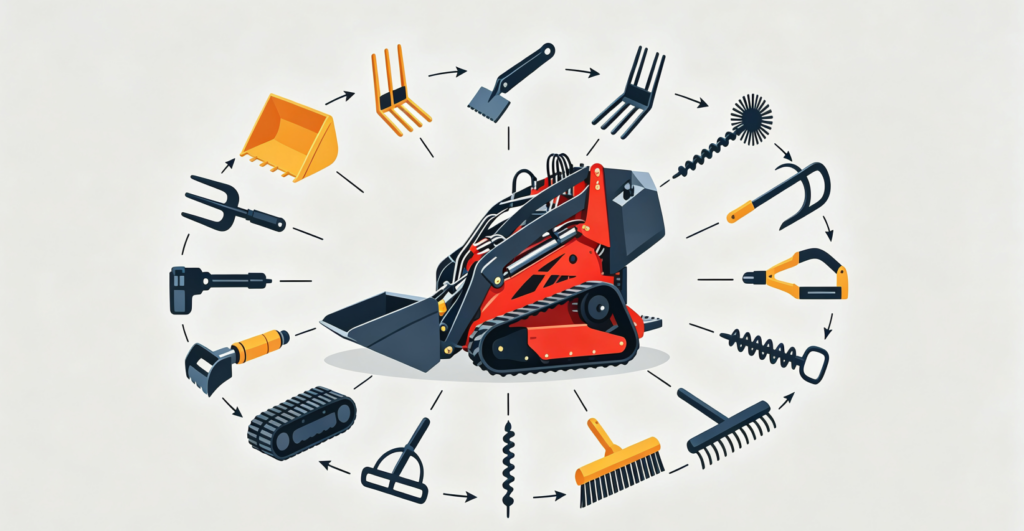
Another advantage is that you can swap the working attachment. Depending on the model and its hydraulic setup, a mini excavator can take on some jobs beyond digging, so you don’t need to bring in separate equipment for every task.
Attachment compatibility isn’t universal, though. Before you buy or rent, check the mounting method, weight, hydraulic flow, and the manufacturer’s specified compatibility range.
Fits the Transport and Logistics Needs of Smaller Projects
On some projects, a lighter compact machine is easier to move and schedule on site. The actual transport method still depends on the machine’s operating weight, the trailer’s load capacity, the towing vehicle’s rating, and local transport regulations.
So a smaller machine doesn’t mean you can skip the transport checks. Before buying in particular, factor in the combined weight of the machine, attachments, and trailer.
Common Attachments That Expand Mini Excavator Uses
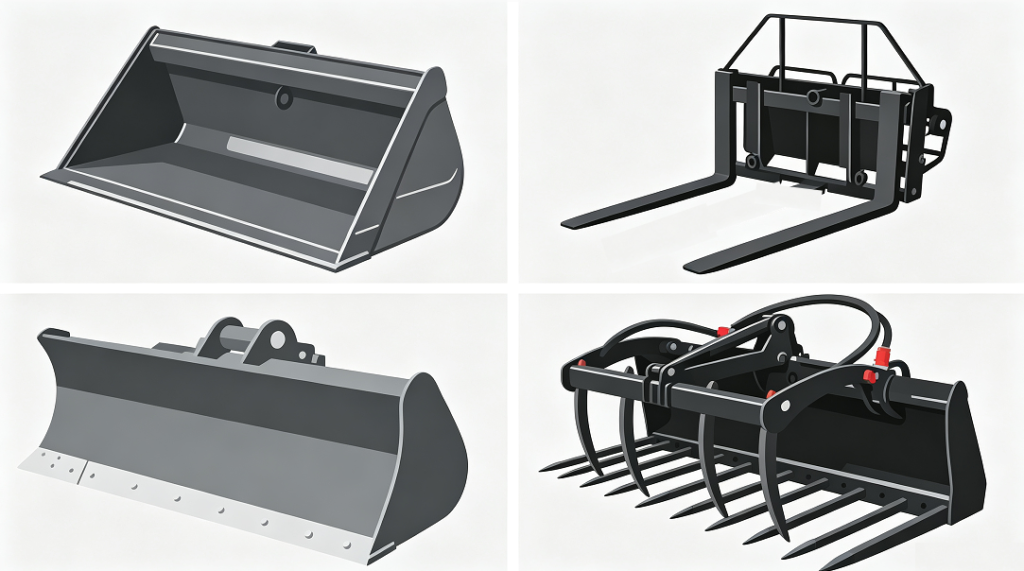
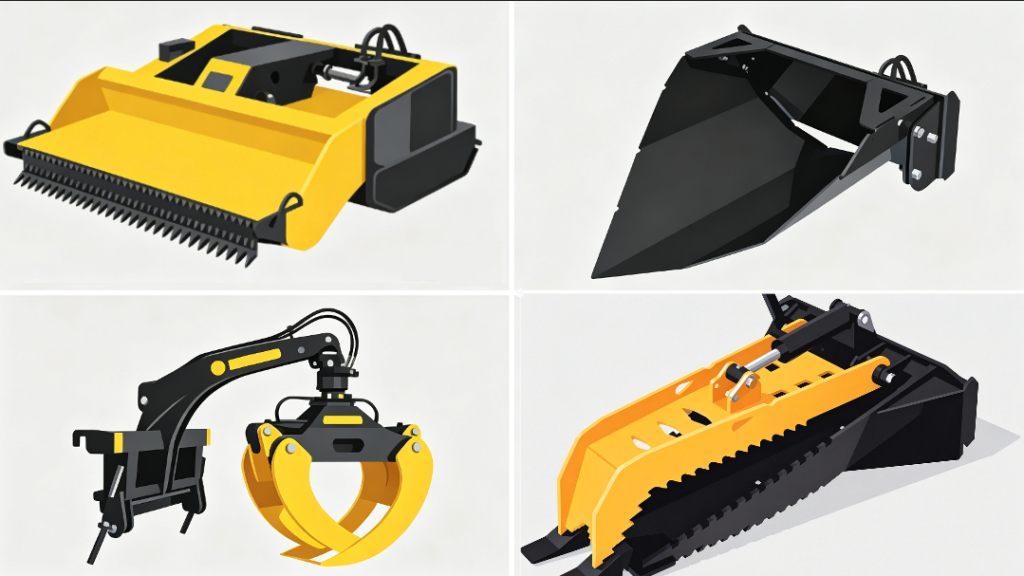
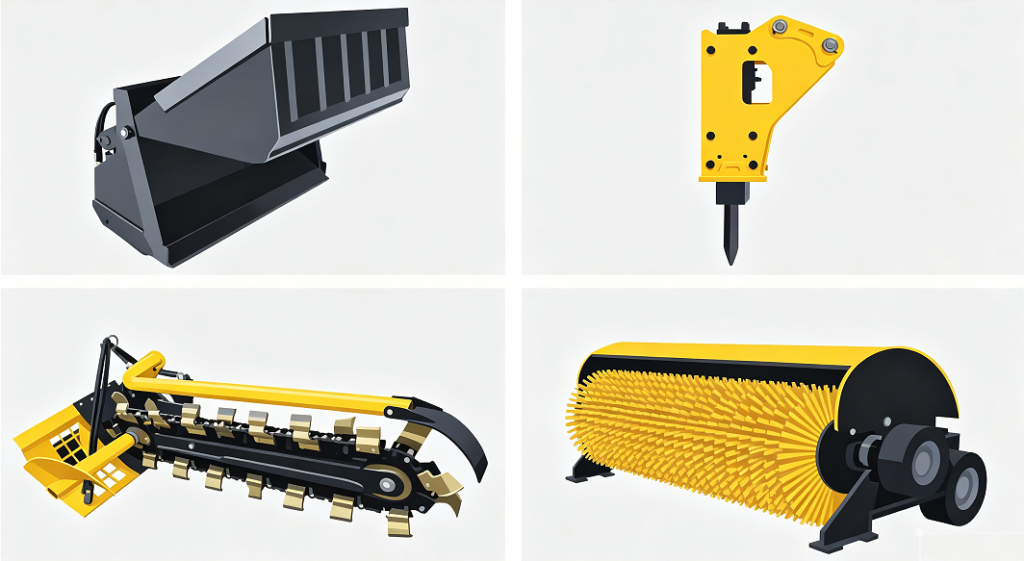
Choosing the right attachments expands the range of work your machine can take on. Here are some of the common types.
| Attachment | Main use | What to confirm |
| Standard bucket | Digging soil, loading material | Bucket capacity, width, and the specific job conditions |
| Narrow or trenching bucket | Digging narrower trenches | Trench design dimensions and soil type |
| Auger | Drilling holes, some tree pits and post holes | Hydraulic compatibility, auger size, and ground conditions |
| Breaker | Breaking up some concrete or other hard materials | Hydraulic flow, machine compatibility, and job safety |
| Grapple or thumb | Grabbing and moving certain materials | Load limits, attachment type, and material characteristics |
These attachments shouldn’t be seen as a case of “bolt it on and it’ll do everything related.” What they can actually achieve still depends on the machine’s specs, the attachment design, and the conditions on site.
How Do You Choose the Right Mini Excavator for Your Uses?
Rather than going straight to the search for the “best tonnage”, it’s better to pin down your project requirements first.
First, check whether the machine can get into the work area. On residential and landscaping jobs, access width, fence positions, and surrounding buildings often drive the choice.
Second, confirm the dig depth, working radius, and volume of material you need to move. Digging capability varies between models, so operating weight alone won’t tell you.
Third, think about whether you need any special attachments. If the project involves drilling, breaking, or grabbing material, check that your target model supports the relevant attachments.
Finally, weigh up buying versus renting based on how often you’ll use the machine and what it costs. If it’s only needed for a couple of short-term projects, renting may be the better option; if you’ll use it often, work out the purchase, maintenance, transport, and downtime costs.
When Are Mini Excavator Uses Not the Right Choice?
A mini excavator doesn’t suit every project. In the following situations, consider other equipment or rethink the construction approach:
- Large-scale earthmoving: If you need to move a lot of material in a short space of time, larger digging equipment may be the more appropriate capability.
- Depth or working radius beyond the machine’s limits: Choose the machine according to the manufacturer’s published specifications — don’t rely on an educated guess.
- Lifting tasks outside the permitted range: A mini excavator’s lifting capacity depends on the model, working radius, attachment, and specific configuration. It shouldn’t be treated as a general-purpose crane.
- Unstable or unsuitable ground: Soft, slippery, steeply sloped, or low-bearing-capacity ground can affect machine stability and job safety.
- Sites without safe working conditions: If underground utilities, nearby buildings, or demolition structures pose unacceptable risks, complete the necessary surveys and engineering assessments first.
Judging whether a machine suits a given job means weighing up working capability, productivity, site conditions, and safety requirements together — not just the purchase price or the machine’s size.
What’s the Difference Between a Mini Excavator and a Large Excavator?
The main differences come down to machine size, working capability, mobility, and the scale of project each one suits.
Mini excavators are generally better suited to confined sites, localised excavation, and smaller projects. Large excavators are more likely to suit jobs that need greater digging capability, higher productivity, or large-scale earthmoving.
Transport, fuel, operators, and site logistics all come into the decision too. It’s not accurate to say a smaller machine is always cheaper, or that a bigger one is always faster. For a specific project, compare the total cost and completion time for the whole job.
FAQs
What can a mini excavator do?
Common uses include landscaping, trenching, residential construction, drainage work, some light demolition, agricultural land maintenance, and localised grading. The actual range of work depends on the machine’s specs, attachments, and site conditions.
Can a mini excavator be used for demolition?
It can handle some light demolition tasks, but you have to use the right attachment and confirm the machine’s hydraulic capacity and the safety conditions on site. Complex or large-scale demolition requires professional assessment.
Can a mini excavator replace a large excavator?
Not completely. It may be more convenient in tight spaces and on small-scale tasks, but it’s limited when it comes to dig depth, working reach, and large-scale earthmoving.
Is it better to buy or rent a mini excavator?
That depends on how often you’ll use it, the project timeline, your equipment maintenance capacity, transport costs, and your finances. For short-term or occasional use, compare rental options first; for frequent, long-term use, it’s worth working out the total cost of ownership.
The Bottom Line
The main value of a mini excavator is that, within a certain working capability, it can dig, trench, grade, and handle some demolition work with a relatively compact machine. With the right attachments, it can also take on a range of supporting tasks.
When you’re choosing equipment, though, don’t focus only on how many jobs it can do or what the machine costs. Working space, dig depth, attachment compatibility, transport requirements, and project scale matter just as much. Define your project requirements first, then check them against the manufacturer’s specifications — that’s how you’ll work out whether a mini excavator fits the project you have in mind.
Sources
- 40–60% productivity boost — Beacon Funding, “The Hardscaper’s 2026 Equipment Checklist for Maximum Productivity,” 2026. https://www.beaconfunding.com/blog/article/the-hardscapers-2026-equipment-checklist-for-maximum-productivity
- UK contractor trenching/landscaping case: Yanmar, “From flood barriers to princess castles: Yanmar SV26 does it all,” 2026. https://www.yanmar.com/eu/construction/news/2026/04/28/164424.html
- Bucket weights & stump removal time: AHM Corp, “Mini Excavator Attachment Guide,” 2026. https://ahmcorp.com/blogs/news/mini-excavator-attachment-guide
- Hand-digging thresholds: BigRentals, “When to Rent a Mini Excavator Instead of Digging by Hand,” 2026. https://bigrentals.com/rental-resources/equipment-rentals/when-to-rent-a-mini-excavator-instead-of-digging-by-hand
- 811 waiting period: Kentucky 811, “The 811 Process.” https://kentucky811.org/process/
- Bobcat E17z housing project: Earthmovers Magazine, “Efficiency in a compact size,” 2026. https://www.earthmoversmagazine.co.uk/news/view,efficiency-in-a-compact-size_8181.htm
- OSHA safety requirements: OSHA, “Trenching and Excavation Safety.” https://www.osha.gov/trenching-excavation
- Fatality statistics: OSHA, “Construction Focus Four Training.” https://www.osha.gov/training/outreach/construction/focus-four
- North Carolina fatality: NIOSH / CDC, “Hispanic Laborer Dies After Footing Collapse,” 2007. https://stacks.cdc.gov/view/cdc/167270
- Texas ROPS fatality: OSHA, “US Department of Labor cites Texas contractor…”, 2026. https://www.osha.gov/news/newsreleases/dallas/20260713
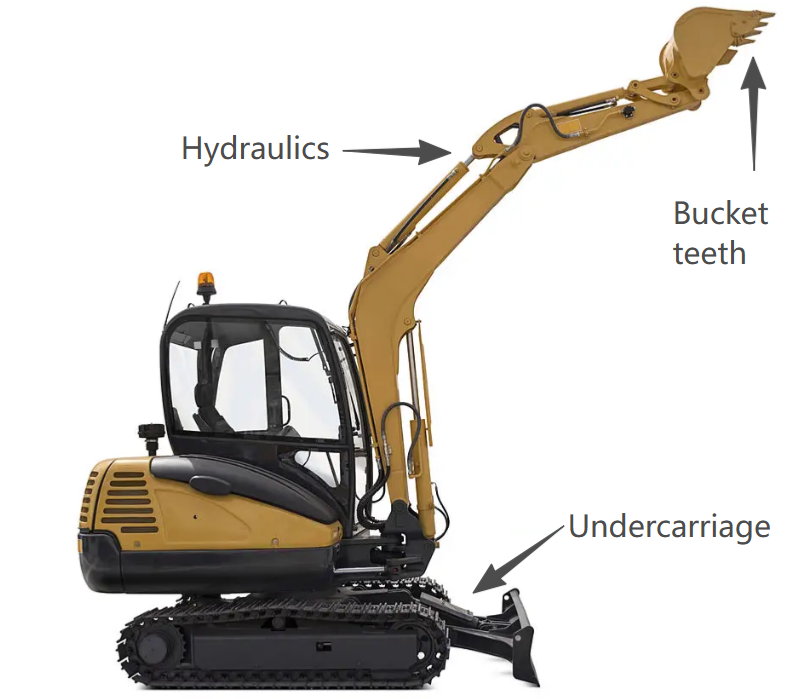
There is another article about parts for mini excavators; feel free to click if you're interested.